Automotive Interior Air Quality (VIAQ) testing evaluates the odour and chemical emissions of materials used inside vehicle cabins.
Automotive seat covers, microfiber leather, PVC leather, synthetic leather, foam, adhesives, and other interior materials may release odours and volatile organic compounds (VOCs) under different temperature and environmental conditions.
These emissions can affect the air quality and comfort of vehicle interiors.
For automotive manufacturers and seat suppliers, interior air quality testing is an important part of material selection, product development, and quality control.
At MICOOSON, we support customized microfiber leather and PVC leather development with testing arrangements based on customer specifications and automotive industry requirements.
VDA 270 is a German automotive testing method used to evaluate the odour characteristics of materials and components used inside motor vehicles.
The test assesses the odour released by materials under specified temperature and climate conditions.
It is particularly relevant to:
Automotive microfiber leather
PVC leather seat covers
Automotive upholstery materials
Seat foam and interior trim materials
Door panels and other cabin components
The test uses sensory evaluation to assess the intensity and characteristics of material odours.
Key Benefits:
Evaluates unpleasant odours from automotive leather.
Supports material selection for vehicle seat manufacturers.
Helps improve the interior comfort of vehicle cabins.
Provides documented odour evaluation results.
VDA 278 is a thermal desorption analysis method used to characterize organic emissions from non-metallic automotive materials.
It is commonly applied to materials such as textiles, leather, polyurethane, plastics, foams, adhesives, and films.
The method evaluates two main emission parameters:
VOC – Volatile Organic Compounds
Measures volatile organic emissions released from the tested material under specified thermal desorption conditions.
FOG – Condensable Organic Compounds
Evaluates the portion of condensable organic substances released from the material under the specified test conditions.
The analysis uses thermal desorption combined with gas chromatography and mass spectrometry (TD-GC/MS).
Key Benefits:
Evaluates VOC and FOG emissions from automotive leather.
Supports low-emission material development.
Helps automotive suppliers evaluate material emissions.
Provides analytical data for customer and OEM specifications.
ISO 6452 specifies a method for determining the fogging characteristics of rubber- or plastics-coated fabrics used as trim materials in motor vehicle interiors.
Fogging occurs when substances released from interior materials condense on cooler surfaces, such as vehicle windows.
For automotive microfiber leather and PVC leather, fogging performance is an important consideration when selecting upholstery materials.
Key Benefits:
Evaluates fogging characteristics of coated fabrics.
Helps assess potential condensation on vehicle glass.
Supports automotive seat cover material development.
Provides test results for automotive interior material evaluation.
ISO 12219 is a series of international standards for evaluating VOC emissions from vehicle interior air, components, and materials.
Different parts of the series use different sampling and testing methods.
For automotive microfiber leather and PVC leather, relevant methods include:
ISO 12219-2: Bag method for screening VOC, formaldehyde, and other carbonyl emissions.
ISO 12219-3: Micro-scale chamber method for screening VOC emissions.
ISO 12219-4: Small chamber method for determining VOC emissions from vehicle interior materials.
ISO 12219-5: Static chamber screening method for VOC and carbonyl emissions.
These methods help automotive suppliers evaluate emissions from materials and components used inside vehicle cabins.
The appropriate test method depends on the material, sample size, testing purpose, and customer specifications.
Automotive leather is in direct contact with the air inside vehicle cabins.
For automotive seat manufacturers, selecting suitable low-emission materials is important for product quality and passenger comfort.
Automotive interior air quality testing helps evaluate:
Material odour under different temperature conditions.
VOC and condensable organic emissions.
Fogging characteristics of coated fabrics.
Formaldehyde and other carbonyl emissions where specified.
Material suitability for automotive interior applications.
These tests are particularly relevant to automotive seat covers, door panels, interior upholstery, and other cabin materials.
MICOOSON is a professional microfiber leather manufacturer providing customized PU microfiber leather and PVC synthetic leather solutions for global automotive and furniture customers.
We understand that automotive seat manufacturers and OEM suppliers have specific requirements for material emissions, odour, fogging, and overall interior quality.
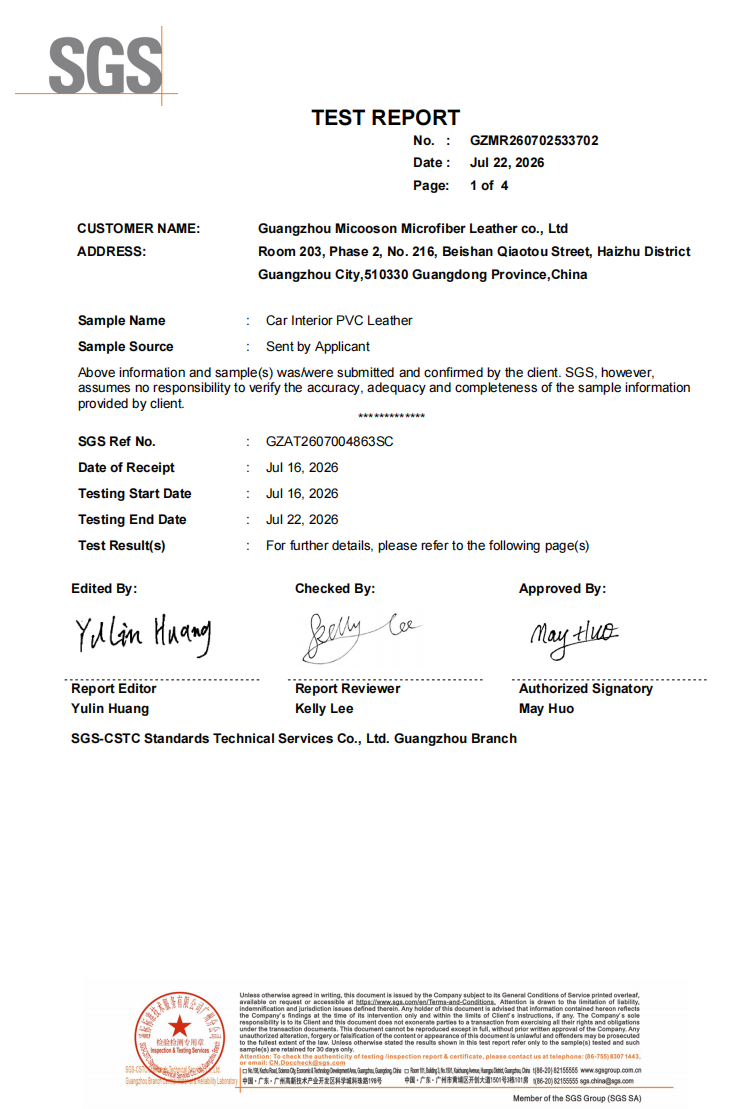
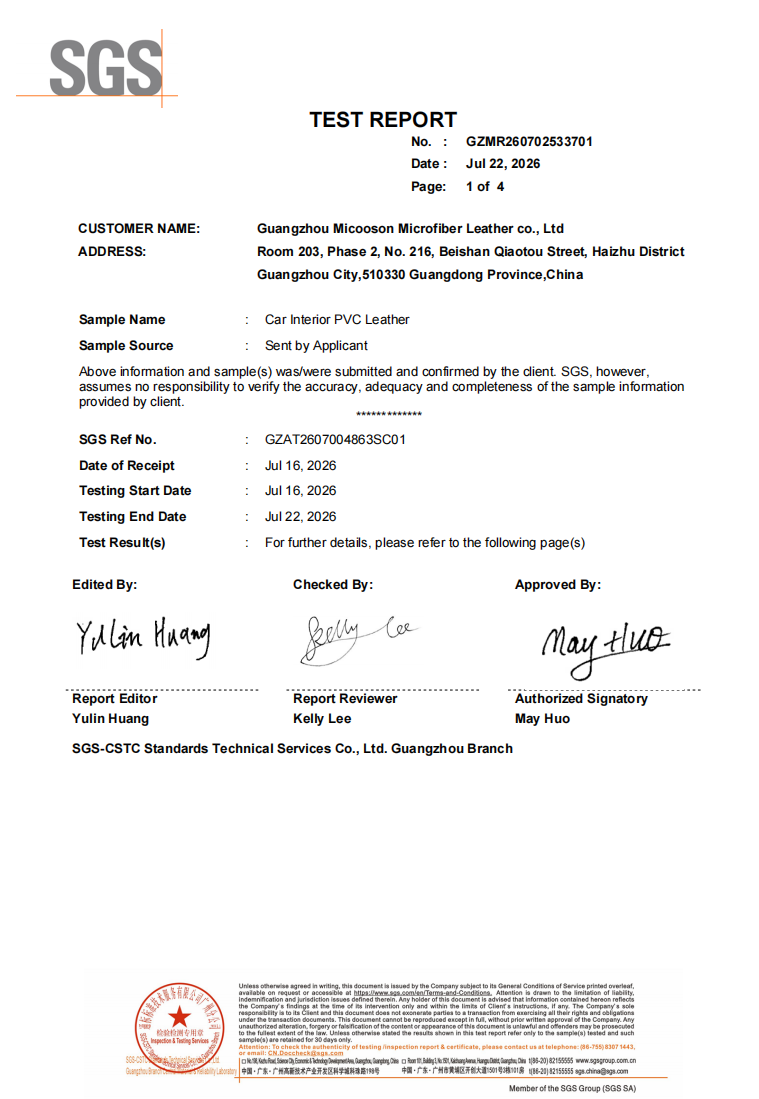
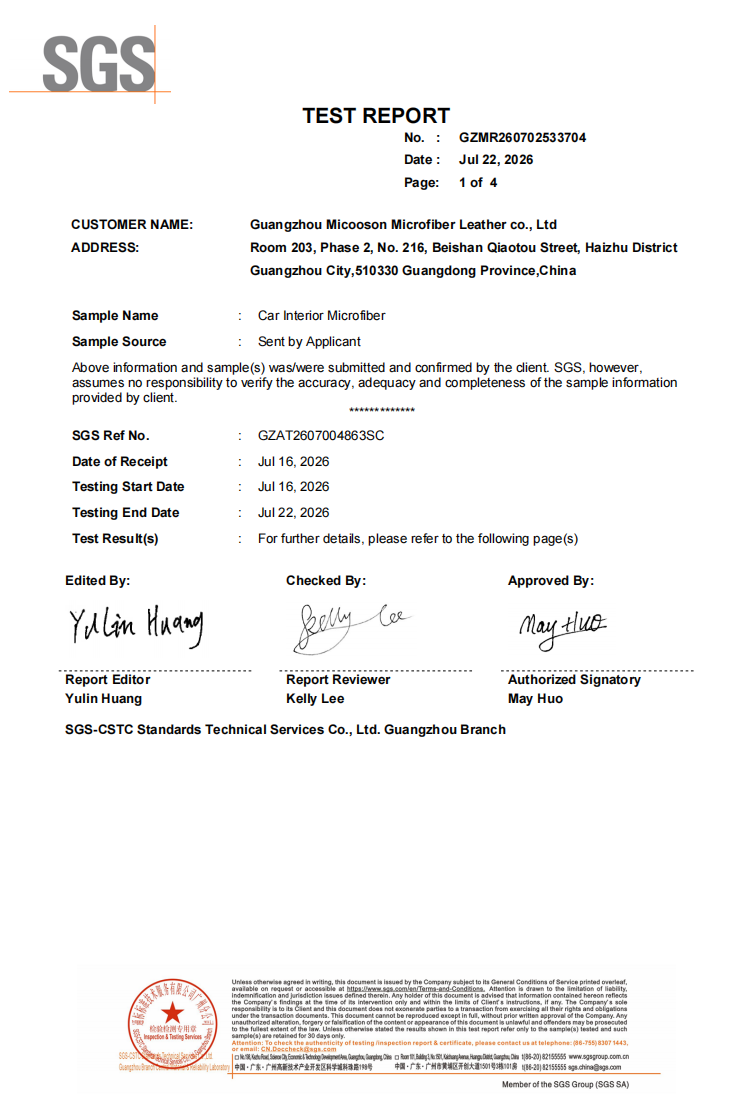
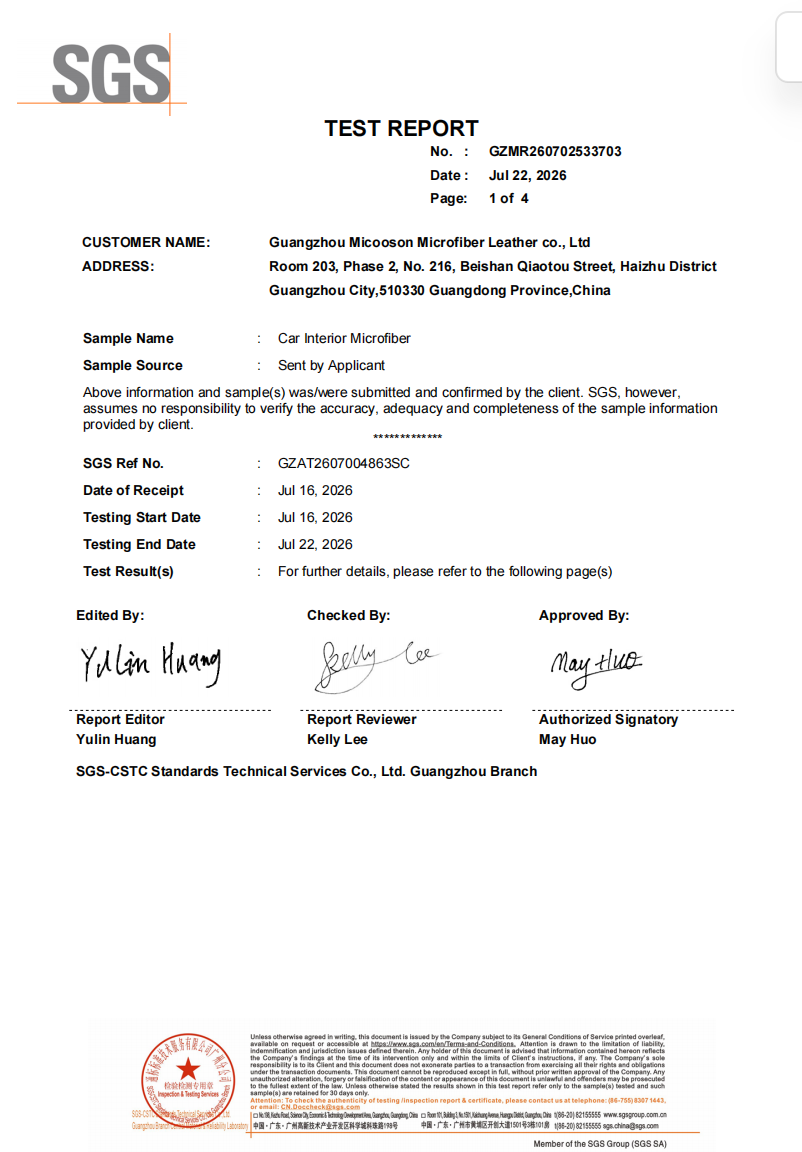
MICOOSON supports customized material development and third-party laboratory testing arrangements according to customer specifications.
Our customization services include:
Customized low-odour microfiber leather formulations.
Low-emission PU microfiber leather development.
Customized PVC automotive leather materials.
Different colors, thicknesses, grains, and surface finishes.
VDA 270 automotive odour testing arrangements.
VDA 278 VOC and FOG emission testing arrangements.
ISO 6452 automotive fogging testing arrangements.
ISO 12219 VOC emission testing coordination.
Third-party laboratory test reports and technical documentation.
Testing arrangements and final results depend on the selected test method, sample construction, customer requirements, and actual laboratory evaluation.
MICOOSON customized synthetic leather solutions can be developed for:
Automotive seat covers
Car seat upholstery
Automotive door panels
Vehicle interior trim
Commercial vehicle seating
Automotive interior decorative materials
Customized OEM and ODM automotive projects
At MICOOSON, we focus on developing customized microfiber leather and PVC leather solutions for international automotive customers.
From material formulation and surface texture to odour, VOC, fogging, and durability testing, our team supports customers in developing materials according to their project specifications.
Whether you are an automotive seat manufacturer, interior trim supplier, or vehicle upholstery distributor, MICOOSON can support your material development and testing requirements.
Contact MICOOSON Today
Looking for low-odour and low-emission microfiber leather for automotive seats?
Contact MICOOSON to discuss your automotive interior air quality requirements and customized synthetic leather solutions.
MICOOSON – Professional Microfiber Leather Manufacturer for Global Automotive Applications.